Fire Alarm Guides
Warning Signs Your Fire Alarm System Needs Upgrading
Is your fire alarm system showing warning signs? Learn when frequent faults, poor coverage, and outdated detectors mean it's time to upgrade: across Manchester and beyond.
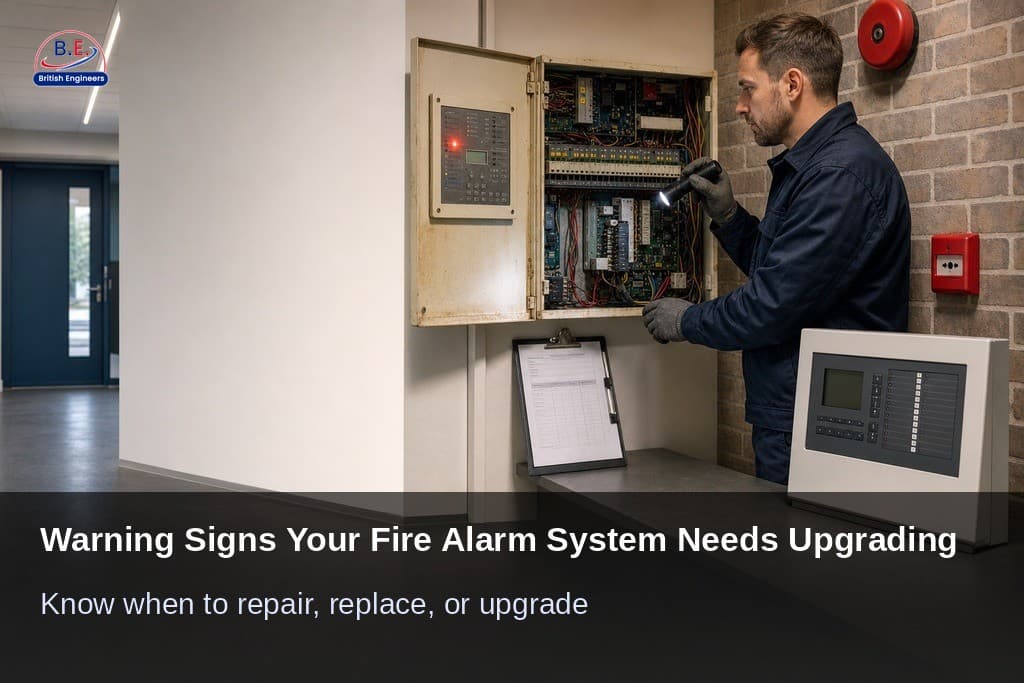
Table of contents
Knowing when your fire alarm system needs upgrading is one of the most important safety responsibilities any homeowner or property manager can take on. A fire alarm system is not a fit-and-forget installation. Over time, components degrade, standards evolve, and buildings change in ways that leave older systems struggling to keep up. Spotting the warning signs early, before an incident occurs, can make an enormous difference to both safety and compliance.
This article walks through the key indicators that your current system may have reached the limits of its reliable service life. Whether you manage a commercial property in Salford, a converted mill in Ancoats, or a residential home in Stockport, understanding these signs puts you in a much stronger position when deciding what to do next.
How to Tell If Your Fire Alarm System Needs Upgrading
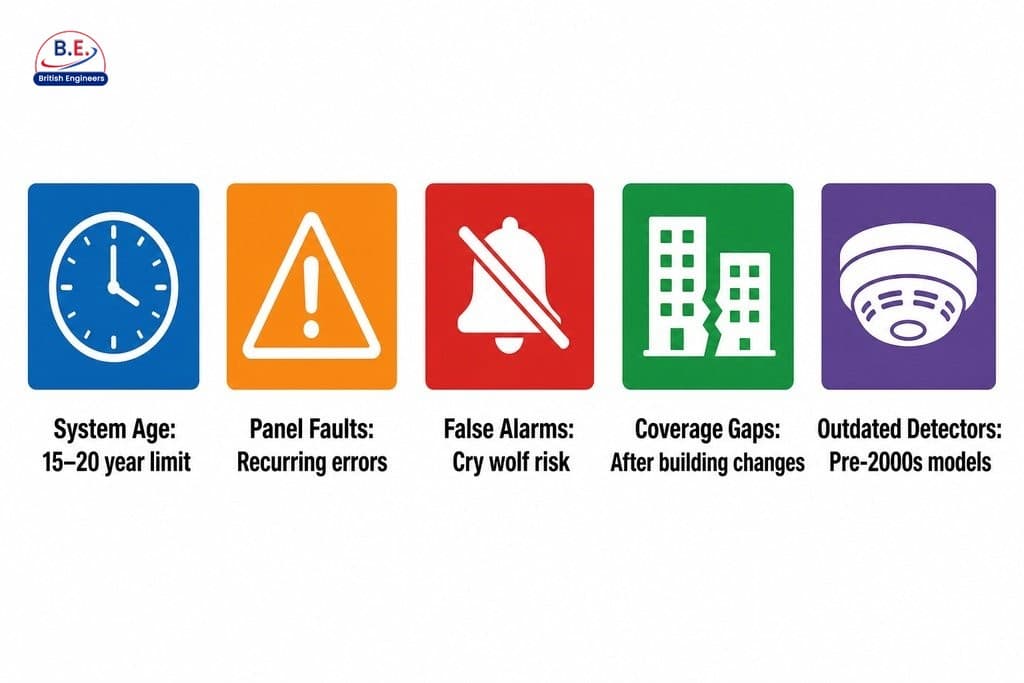
Age alone does not tell the full story, but it is a significant factor. According to Pavion, most commercial fire alarm systems have an average lifespan of 15 to 20 years. After that point, manufacturers often discontinue parts and software support becomes limited. Finding replacement components grows increasingly difficult, and the cost of keeping an old system running often outweighs the cost of replacing it entirely.
Compliance is also a pressing concern. UK fire alarm systems must meet the requirements of BS 5839, and systems installed before the 2017 revision of BS 5839-1 may no longer satisfy current standards. A system that was perfectly acceptable a decade ago could now fall short of what regulators and insurers expect. A property developer in Preston was fined £165,000 following serious fire safety oversights during a warehouse conversion, a figure that makes the cost of an upgrade look modest by comparison.
Outdated systems also lack the integration capabilities that modern buildings increasingly require. Current fire alarm technology can connect with emergency lighting, sprinkler systems, access control, and building management platforms. Older systems cannot offer this level of coordination, leaving safety procedures dependent on manual responses that modern automation handles more reliably.
Warning Signs Your Fire Alarm System Is Failing
Some deterioration is gradual and easy to overlook, particularly when individual issues seem minor in isolation. Warning signs tend to cluster over time, and the pattern they form is often more telling than any single fault. Watch out for:
- Unexplained activations or alarms triggering for no clear reason
- Sluggish or delayed responses to test signals
- Detectors that fail to communicate with the control panel
- Recurring faults that reappear shortly after being repaired
It is worth distinguishing between normal wear, such as a single detector requiring replacement, and a pattern of recurring failures that points to a system-wide problem.
Repeated false alarms deserve particular attention. They may seem like a nuisance rather than a danger, but they carry a recognised safety risk. Frequent false alarms can create what is often called the “cry wolf” effect, where occupants begin to ignore alarm signals because they assume it is another false activation. In a genuine emergency, that hesitation can have serious consequences.
Frequent Fire Panel Faults
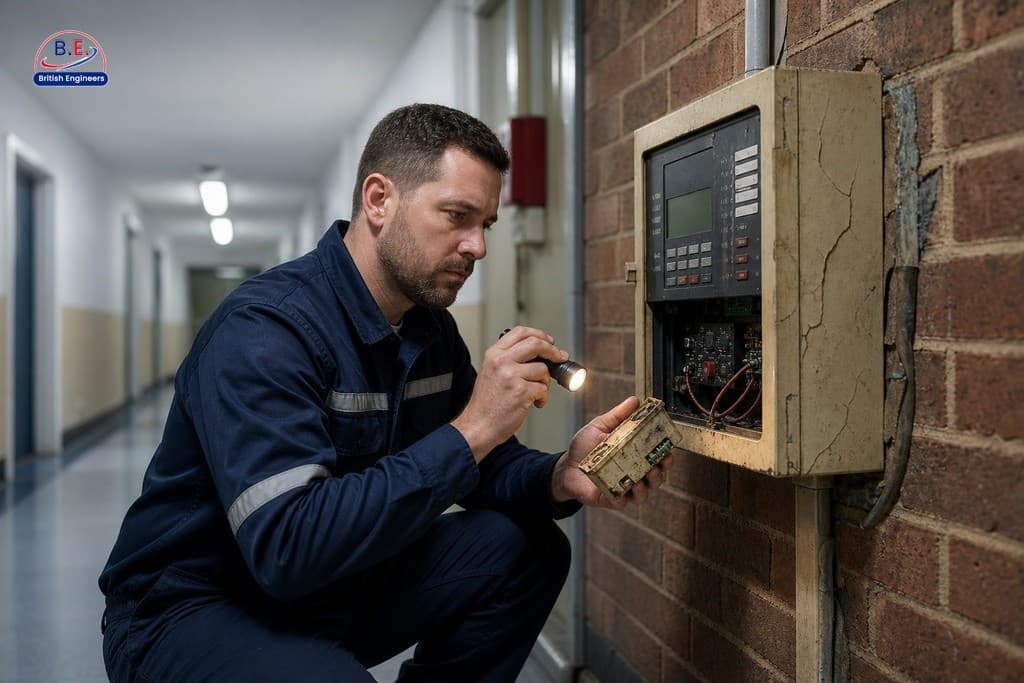
The fire alarm control panel is the brain of the entire system. Recurring fault codes, zone failures, and communication errors between the panel and detectors all suggest the system is struggling to maintain reliable operation.
A single fault, promptly resolved, is not cause for alarm. But when the same faults reappear, or new ones emerge shortly after repairs, that pattern is worth investigating seriously. Panel faults can indicate a component-level issue, such as a failing detector or a degraded cable run, but they can also point to a system-wide problem. Older panels may no longer be compatible with replacement parts currently available on the market, making each repair more complex and expensive. At that point, continued maintenance is unlikely to restore the system to a genuinely reliable state.
Poor Alarm Coverage After Building Changes
Buildings change over time. Extensions are added, layouts are reconfigured, and occupancy levels shift. A fire alarm system designed for a building’s original footprint may have significant detection gaps once structural changes have been made.
This is a particular concern across Greater Manchester, where office repurposing in the city centre, warehouse conversions in Trafford Park, and residential extensions in areas such as Didsbury and Chorlton are all commonplace. Coverage shortfalls often go unnoticed until a formal inspection reveals that certain areas fall outside the detection range of existing sensors. The practical consequences are serious: fire can take hold in an undetected area before the system responds. Identifying these gaps through a professional site survey, rather than discovering them during an incident, is always the responsible approach.
Obsolete Detectors That No Longer Meet Standards
Not all detectors are equal, and some types widely installed in previous decades are now considered inadequate for modern fire safety requirements.
- Ionisation detectors: Once the standard choice, but known to perform poorly with slow-burning, smouldering fires, which are among the most dangerous in residential and commercial settings.
- Heat-only detectors: Older units installed in kitchens or plant rooms lack the sensitivity and response speed of current technology.
- Discontinued models: When detector models are no longer manufactured, sourcing direct replacements becomes difficult. Substituting with a different model can introduce compatibility issues with the existing panel.
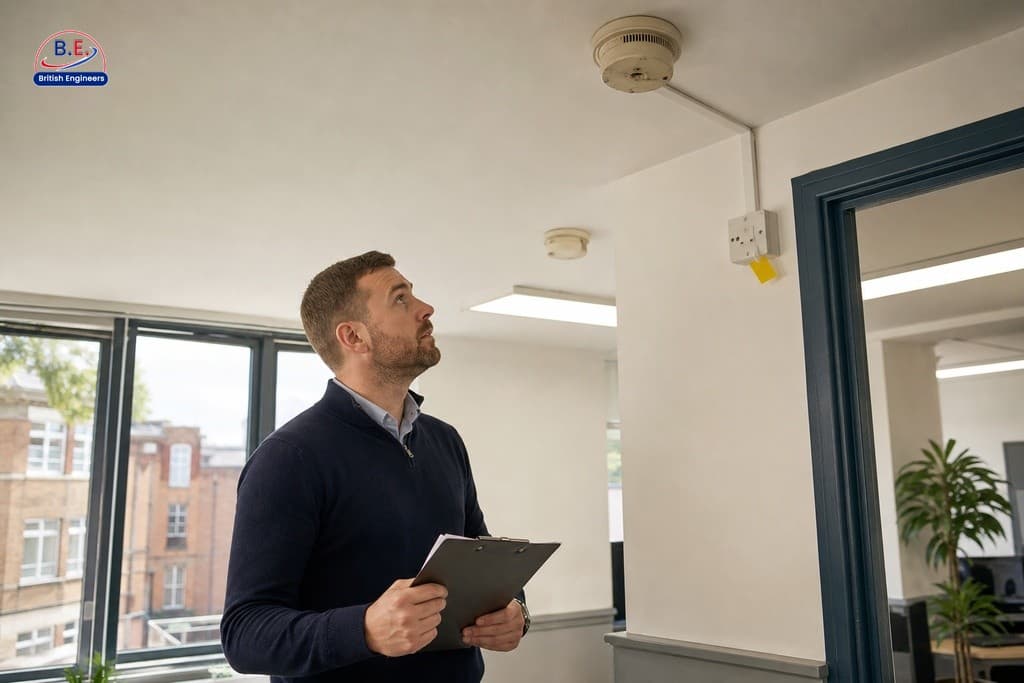
Smoke detectors should be replaced at least every 10 years to comply with British Standards. Systems still running original detectors well beyond that point are unlikely to meet current compliance requirements. Upgrading to modern optical, multi-sensor, or aspirating detectors resolves these issues and brings the system in line with BS 5839 expectations.
| Detector Type | Common Installation Era | Key Limitation | Modern Alternative |
|---|---|---|---|
| Ionisation detector | Pre-2000s | Poor performance with slow-burning, smouldering fires | Optical or multi-sensor detector |
| Heat-only detector | Pre-2010s | Lower sensitivity; slower response compared to current technology | Modern heat detector or multi-sensor unit |
| Discontinued model | Varies | Replacement parts unavailable; panel compatibility issues | Compatible current-generation detector |
When to Replace Rather Than Repair
There comes a point in every system’s life where repairs shift from a sensible maintenance strategy to an increasingly poor investment. The tipping point is usually a combination of factors: parts that are difficult to source, engineers spending more time diagnosing faults than resolving them, and a system that continues to generate alerts and failures despite ongoing attention.
As Larry Rietz, Global Service Line Leader for Fire Detection and Alarm at Jensen Hughes, has noted: “Every fire alarm system will need to be upgraded or replaced at some point. A planned system replacement can be as much as one half the cost of an ’emergency’ system replacement.” Proactive planning for fire alarm upgrades and replacements is significantly more cost-effective than being forced into an emergency installation following a system failure or enforcement action.
Self-Assessment: Should You Upgrade Your System?
Before speaking to an engineer, it helps to build a clear picture of where your current system stands. Consider the following:
- System age: Has the system been in place for 15 years or more?
- Fault history: Are panel faults or false alarms becoming more frequent?
- Building changes: Has the property been extended or reconfigured since the system was installed?
- Detector types: Are any detectors of a discontinued or outdated model?
- Compliance: Was the system designed to a version of BS 5839 that predates the 2017 revision?
| Assessment Factor | Concern Level | Recommended Action |
|---|---|---|
| System aged 15 years or more | High | Arrange a professional inspection |
| Recurring panel faults or false alarms | High | Investigate pattern; consider full upgrade |
| Building extended or reconfigured | Medium to high | Commission a site survey to identify coverage gaps |
| Discontinued or outdated detectors in use | Medium to high | Replace detectors; check panel compatibility |
| System predates BS 5839-1 2017 revision | Medium | Review compliance with a certified engineer |
If several of these apply, or if you are uncertain about any aspect of your system’s current condition, arranging a formal inspection by a certified fire alarm engineer is the appropriate next step. A self-assessment can help you identify obvious concerns and frame your questions, but it cannot replace a professional inspection.
What a Professional Fire Alarm Upgrade Involves
A responsible upgrade process begins with a thorough site survey. A qualified engineer will assess the current system, evaluate the building layout, identify any coverage gaps, and review whether the existing infrastructure can support a modern installation. From that survey, a system design is produced that reflects the specific needs of the property, rather than a generic solution.
At British Engineers, our certified team works across Manchester, Salford, Trafford, and the wider North West to deliver fire alarm upgrades designed around your property and your situation. We provide transparent quotations with no hidden costs, so you understand exactly what is involved before any work begins. Installation is carried out by qualified engineers using high-quality materials, and commissioning is completed to the standards required by BS 5839. Ongoing support and maintenance are part of our long-term commitment, because we consider our job done only when you feel completely secure in your property.
If any of the warning signs in this article feel familiar, we would encourage you to get in touch with our team for a personalised consultation. A conversation costs nothing, and it could be the most important step you take for your fire safety this year.
Frequently Asked Questions About Fire Alarm System Upgrading
How long does a fire alarm system typically last before it needs replacing?
Most commercial fire alarm systems have a reliable service life of around 15 to 20 years. After this point, replacement parts become harder to source, software support diminishes, and the cost of ongoing repairs can exceed the cost of a full replacement. Smoke detectors in residential systems should be replaced at least every 10 years under British Standards.
Does a fire alarm system need to comply with BS 5839?
Yes. In the UK, fire alarm systems in commercial and residential properties are expected to meet the requirements of BS 5839. Systems installed before the 2017 revision of BS 5839-1 may no longer satisfy current standards. Non-compliant systems can affect insurance cover and expose property owners to enforcement action from fire safety authorities.
Can I repair individual faults instead of replacing the whole system?
Replacing a single faulty detector or component is often perfectly reasonable. However, when faults recur repeatedly, parts are no longer manufactured, or the panel is incompatible with available replacements, continued repair becomes impractical. A pattern of recurring failures generally signals that a full system upgrade is the more reliable and cost-effective route.
Why do false alarms suggest a system may need upgrading?
Frequent false alarms suggest detectors are degraded, poorly positioned, or no longer suited to the environment. Repeated false activations can create a “cry wolf” effect where occupants stop responding promptly. This is a recognised safety risk. Modern detector technology is considerably better at distinguishing genuine fire signatures from false triggers.
What happens if my building has been extended but the fire alarm was not updated?
A system designed for an original building layout will often have coverage gaps after structural changes. Areas added through extensions or reconfigurations may fall outside existing detection zones, meaning a fire could develop undetected. A professional site survey will identify these gaps and determine what adjustments are needed to restore adequate coverage.
How do I find a qualified fire alarm engineer in Manchester?
Look for engineers accredited under recognised schemes such as those offered by the British Approvals for Fire Equipment (BAFE) or the National Security Inspectorate (NSI). These accreditations confirm that engineers work to current British Standards. British Engineers serves Manchester, Salford, Trafford, and the wider North West, offering inspections, upgrades, and ongoing maintenance.