Fire Alarm Installation
How to Choose the Right Fire Alarm System
A practical fire alarm buying guide for Manchester homeowners and property managers. Compare alarm features, understand UK standards, and find the right system for your building.
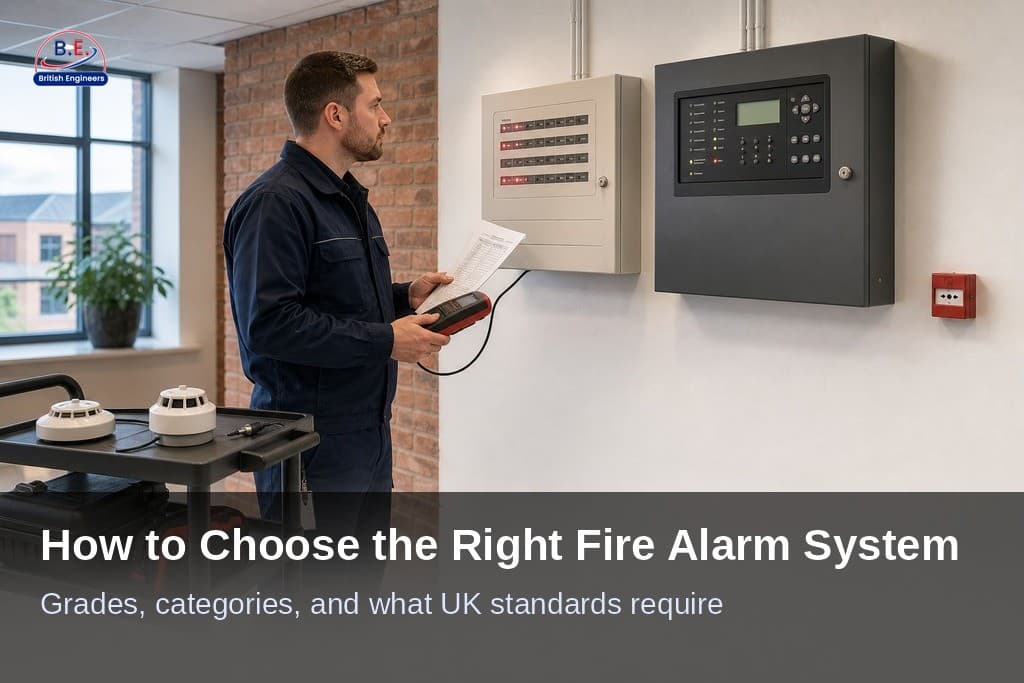
Table of contents
Choosing the right fire alarm system is one of the most important decisions a homeowner or property manager can make. Get it right, and you have a reliable layer of protection working around the clock. Get it wrong, and the consequences range from disruptive false alarms to delayed detection when it matters most. This article is part of a broader fire alarm installation planning guide, and it focuses on giving you a clear, structured path through the decision without overwhelming you with technical jargon.
Whether you manage a commercial premises in Manchester city centre or own a family home in areas such as Salford, Trafford, or Stockport, the core principles are the same. The right system matches your property, meets the relevant standards, and is installed by someone who knows exactly what they are doing.
Why Getting This Decision Right Matters
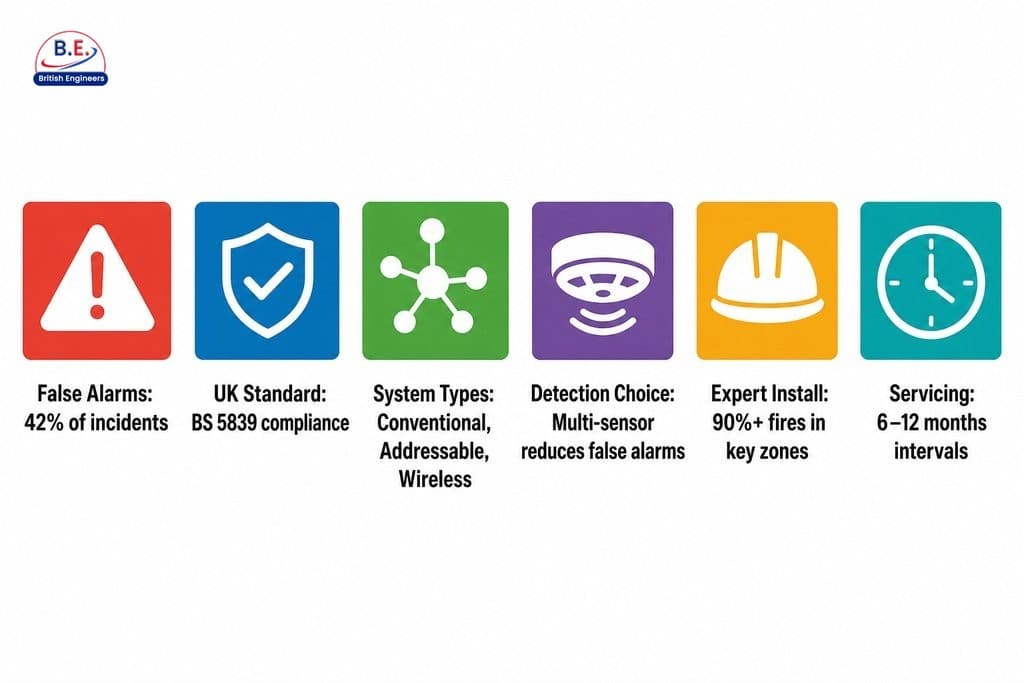
A poorly matched fire alarm system does not simply fall short on protection; it can actively create problems. False alarms are one of the most persistent issues in the UK fire safety sector. According to the BRE (Building Research Establishment), supported by BAFE, live field investigations found that non-compliance with BS 5839-1, including how fire detection and alarm systems are procured and maintained, is a primary cause of false alarms. The scale of this problem is significant: 42% of Fire and Rescue Service incidents in England for the year ending June 2020 were fire false alarms, according to UK Home Office data cited in BAFE and BRE analysis.
False alarms carry real costs. They disrupt occupants, erode trust in the system, and divert emergency resources. As Stephen Adams, Chief Executive of BAFE, put it: “False alarms ‘due to apparatus’ should not be this high: it causes additional cost to the Fire and Rescue Service where going forward budgets will be tighter than usual due to current events.” The solution is not simply buying a more expensive system. It is about selecting the right system for your specific property and having it properly installed.
UK Fire Alarm Standards You Need to Know
In the UK, fire alarm systems are governed primarily by BS 5839, the British Standard that sets out how fire detection and alarm systems should be designed, installed, and maintained. You do not need to read the full standard, but understanding where your property sits within it determines the level of protection required.
BS 5839-1 applies to non-domestic (commercial) premises. BS 5839-6 applies to dwellings, including homes and flats. For commercial properties, fire alarm requirements are often legally mandated through fire safety legislation. For domestic properties, obligations differ depending on whether you are a landlord or an owner-occupier. A qualified engineer can clarify your exact obligations during a site survey.
Fire Alarm Grades and Categories Explained
Under BS 5839-6 for domestic properties, the Grade (A to F) describes the type of system and its components. Grade D, meaning mains-powered interlinked smoke alarms with battery backup, is the most commonly specified for homes. The Category (LD1, LD2, LD3 for life protection; PD1, PD2 for property protection) describes how much of the home is covered and what the system is designed to protect.
Under BS 5839-1 for commercial premises, Category L systems relate to life protection and Category P systems relate to property protection. Numbered subdivisions such as L1, L2, P1, and P2 indicate the extent of coverage across the building.
In plain terms: the Grade tells you how sophisticated and reliable the components are, and the Category tells you how much of your building is covered. A mismatch either leaves areas unprotected or results in unnecessary cost and complexity.
| Standard | Applies To | Grade / Category System | Primary Focus |
|---|---|---|---|
| BS 5839-6 | Domestic properties (homes, flats) | Grade A to F; Categories LD1 to LD3 (life), PD1 to PD2 (property) | Grade = component quality; Category = coverage extent |
| BS 5839-1 | Non-domestic / commercial premises | Categories L1 to L2 (life), P1 to P2 (property) | Extent of building coverage and protection objective |
Key Factors When Choosing a Fire Alarm System in Manchester
Before comparing products, assess your property against these factors: the size and layout of the building, the number of occupants, the type of use (residential, commercial, or mixed-use), and any existing wiring or infrastructure.
A single-storey home with an open-plan layout has very different requirements from a multi-floor commercial building with separate zones and fire compartments. Greater Manchester’s property stock is particularly varied, from Victorian terraces and converted mill buildings in areas like Ancoats and Castlefield, to modern apartment blocks and purpose-built office developments, and that variety has a direct bearing on which system is appropriate.
For residential properties, the primary concern is life protection. Research published in the Fire Safety Journal (ScienceDirect) found that mandatory smoke alarm installation demonstrably reduced residential fire fatality risk, providing strong evidence that correctly specified fire detection systems are life-critical. For commercial properties, considerations extend to business continuity, legal compliance, and protecting assets alongside occupants. Mixed-use buildings, such as flats above commercial premises, which are common throughout Manchester city centre and surrounding boroughs, require careful zoning so each area receives appropriate coverage.
Alarm Features Worth Comparing
Detection Type
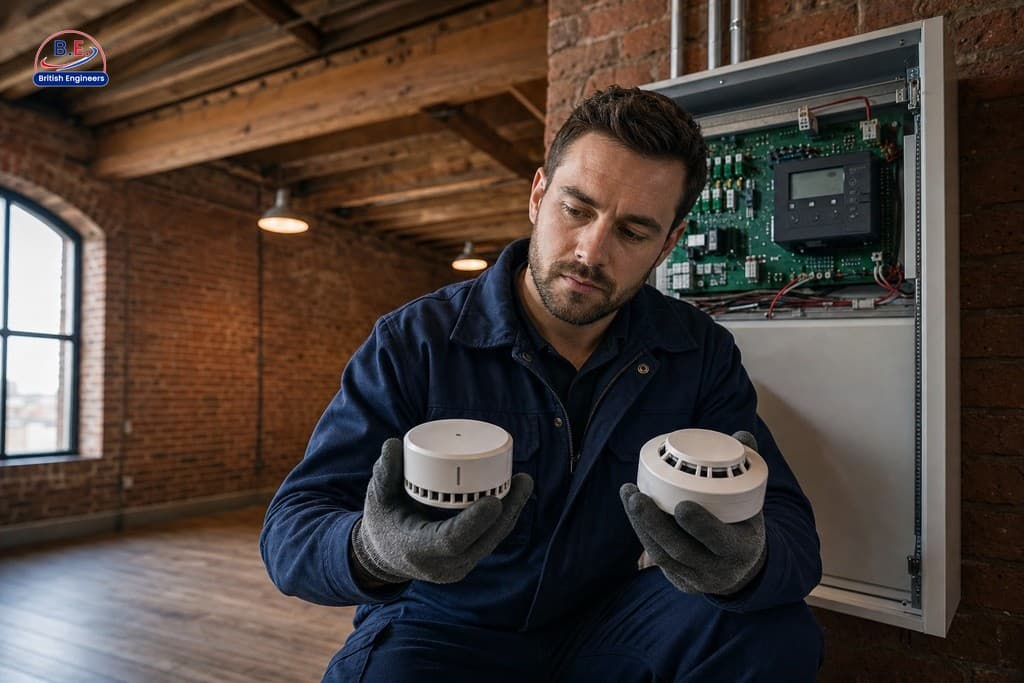
Smoke detectors are the most widely used and relatively affordable option. Multi-sensor detectors, combining smoke, heat, and sometimes carbon monoxide sensing, offer significantly improved accuracy. Research published in the Fire Safety Journal found that multi-detector signal fusion approaches can substantially reduce false alarms compared to single-detector systems, which is a meaningful advantage in busy or lived-in environments.
Wiring and Connectivity
Conventional wired systems suit new builds or major refurbishments where cable runs can be planned from the outset. Wireless systems offer flexibility where running cables would be disruptive or impractical, particularly relevant in Greater Manchester’s substantial stock of older and listed buildings.
System-Level Features
Interconnection ensures that an alarm in one room triggers all units throughout the building. Battery backup maintains protection during power cuts. Panel control capabilities become increasingly important in larger or more complex properties.
Systems for Buildings With Specific Needs
Older and listed buildings, of which Greater Manchester has a considerable number, particularly in conservation areas across the city and in towns such as Altrincham and Glossop, often have restricted cable routes or decorative plasterwork that cannot be disturbed. Wireless addressable systems are frequently the preferred approach in these cases, as they minimise physical intrusion while still meeting BS 5839 requirements.
Properties with specific risk profiles, such as commercial kitchens, workshops, or premises storing materials with elevated fire hazard ratings, require detectors matched to the particular threat. A standard smoke detector placed near a commercial cooker will generate constant false alarms. Getting this detail right is central to building a system that performs when it genuinely needs to.
| System Type | Best Suited To | Fault / Activation Identification | Cable Disruption | Typical Complexity |
|---|---|---|---|---|
| Conventional wired | New builds or full refurbishments with planned cable routes | Zone only (not individual device) | High: full cable runs required | Low to medium |
| Addressable wired | Larger or more complex commercial buildings | Exact device identified | High: full cable runs required | Medium to high |
| Wireless addressable | Older, listed, or heritage buildings with restricted cable routes | Exact device identified | Low: minimal physical intrusion | Medium |
Do I Need a Certified Engineer, or Can I Do It Myself?
For basic domestic use, a competent homeowner can fit a standalone mains-powered smoke alarm without professional help. However, anything beyond that, including interlinked systems, addressable panels, commercial installations, or any system intended to meet BS 5839-1, requires a qualified engineer.
An online guide cannot assess your specific building, identify the most likely fire origins in your layout, check existing wiring integrity, or confirm that detector placements comply with the standard. As Stephen Adams of BAFE stated: “The best way to provide a safe building, where false alarms will be minimised and real fires will activate alarms as early as possible, is to specify competent providers to install and maintain these life safety systems.”
Research published in MDPI Fire found that over 90% of fires originate in chambers, corridors, and shafts, reinforcing that detector placement decisions require genuine expertise about where fires are statistically most likely to begin, not simply where it is convenient to fit a device.
What to Check Before Installation Begins
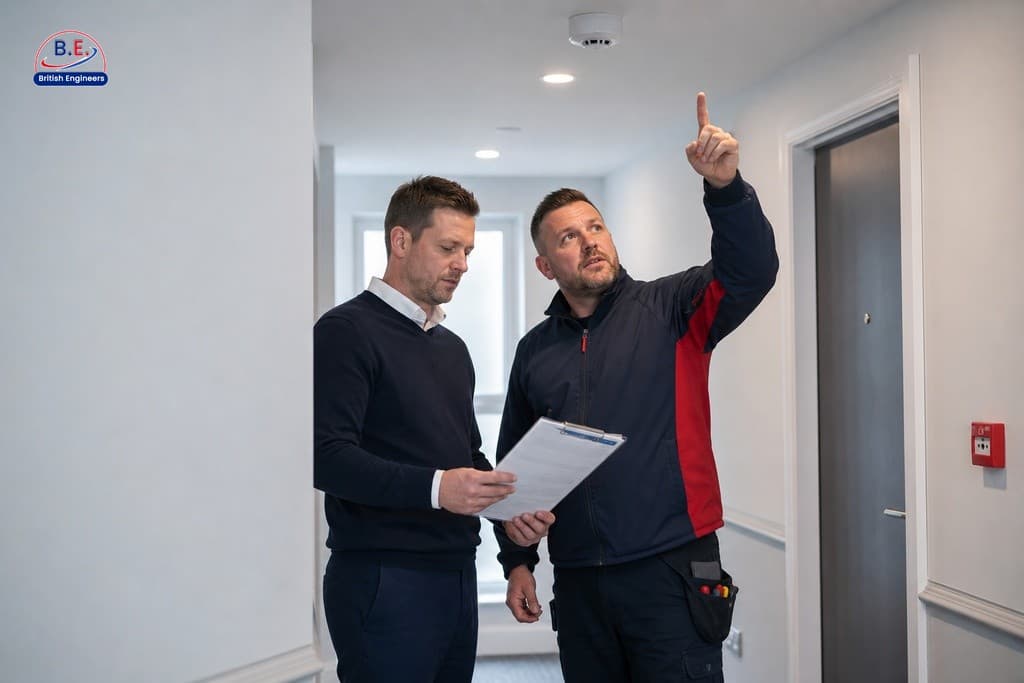
Before any engineer arrives on site, run through these practical checks. Many of them overlap with the questions to ask before getting fire alarms fitted, which is covered in more detail in a dedicated article within this series.
- Verify that the engineers hold relevant certifications and are registered with a recognised scheme.
- Confirm the equipment meets BS 5839 requirements and carries appropriate approvals.
- Clarify what warranty or guarantee is provided on both materials and workmanship.
- Establish what servicing schedule is recommended and whether the provider offers ongoing support.
- Review the quotation carefully; it should be itemised, specifying equipment, the standard it is designed to meet, and any ongoing service obligations.
At British Engineers, every quotation is provided transparently with no hidden charges, and all work is carried out by certified engineers using high-quality materials. That combination of clarity and professional accountability is the standard you should expect from any provider you consider.
Keeping Your Fire Alarm System Reliable Long-Term
A fire alarm system is not a one-time purchase. Regular servicing, typically at six-monthly or annual intervals depending on the system and premises type, is essential for maintaining compliance and ensuring all components remain functional. Batteries degrade, sensors accumulate dust, and control panels need periodic inspection.
Skipping maintenance is one of the most common fire alarm installation mistakes that property owners make after the initial installation, and it is addressed in full detail in a separate article dedicated to that topic.
A system installed and then left without follow-up care will drift out of specification over time, and the protection it provides will quietly diminish. When British Engineers installs a fire alarm system, the relationship does not end at handover. Ongoing maintenance, repairs, and responsive support are part of what we offer, because a reliable system requires reliable aftercare.
If you are ready to make a confident decision about fire protection for your home or business in Manchester or the surrounding areas, get in touch with the team at British Engineers. We will carry out a thorough site assessment, provide a clear and honest quotation, and design a system that fits your property and your peace of mind.
Frequently Asked Questions About Fire Alarm Systems
What type of fire alarm system do I need for a domestic property in the UK?
For most UK homes, a Grade D, Category LD2 system is the standard recommendation under BS 5839-6. This means mains-powered interlinked smoke alarms with battery backup, covering escape routes and high-risk rooms. A qualified engineer can confirm the appropriate grade and category for your specific layout.
Is it a legal requirement to have a fire alarm system in a commercial property in Manchester?
Commercial properties in the UK are subject to fire safety legislation that typically requires an appropriate fire detection and alarm system. The exact requirements depend on the nature, use, and occupancy of the premises. A fire risk assessment, which is itself a legal requirement for most non-domestic premises, will determine what is needed.
Can I install a fire alarm system myself?
A standalone mains-powered smoke alarm can be fitted by a competent homeowner in a domestic setting. Any system beyond that, including interlinked alarms, addressable panels, or commercial installations designed to meet BS 5839-1, should be installed by a certified engineer to ensure it performs correctly and meets the relevant standard.
How often should a fire alarm system be serviced?
Most fire alarm systems require servicing at least annually, and many commercial systems require inspections every six months. Regular servicing keeps detectors accurate, batteries functional, and the system compliant with BS 5839. Your installation engineer should provide a recommended servicing schedule at handover.
Why does my fire alarm keep triggering false alarms?
False alarms are most commonly caused by the wrong detector type for the environment, poor placement, or a lack of maintenance. A smoke detector near a kitchen cooker, for example, will trigger frequently under normal cooking conditions. A competent engineer can assess placement, detector type, and system configuration to resolve the issue.
What is the difference between a conventional and an addressable fire alarm system?
A conventional system groups detectors into zones, identifying which zone has activated but not the individual device. An addressable system identifies the exact detector that has triggered, which aids faster response and fault-finding. Addressable systems generally suit larger or more complex buildings, while conventional systems may be appropriate for simpler, smaller premises.