Fire Alarm Guides
Common Fire Alarm Problems and What Causes Them
Every homeowner and property manager in Manchester should feel confident recognising fire alarm problems when they arise.
Table of contents
Every homeowner and property manager in Manchester should feel confident recognising fire alarm problems when they arise. A fire alarm system is not a set-and-forget installation. It is a living part of your building’s safety infrastructure that responds to its environment, ages with the property, and occasionally gives cause for concern. When something goes wrong, the natural response is worry, but in most cases, faults are both identifiable and resolvable with the right knowledge and professional support.
This practical guide walks you through the most frequent issues affecting UK properties, what they typically mean, and when it is time to call in a certified engineer. Whether you manage a commercial building in the city centre or own a family home in Didsbury, Salford, or Stockport, this guide will help you make sense of what your system is telling you and take the right next steps.
Why Fire Alarm Faults Happen
Even a correctly installed fire alarm system will develop faults over time. This is not a reflection of poor workmanship or low-quality components. It is the reality of electronic systems operating in real-world environments. Temperature fluctuations, dust, humidity, vibration, and gradual component wear all place ongoing demands on detectors, control panels, and wiring. A system that performed flawlessly at installation may begin showing signs of stress years later as building conditions change or components reach the end of their service life.
Research from the BRE (Building Research Establishment), supported by BAFE, found that “the manner in which Fire Detection and Fire Alarm Systems are procured and maintained often results in major areas of non-compliance with BS 5839-1, including non-compliances that might create the potential for false alarms.” Systemic faults are a recognised feature of fire alarm management across the UK, not rare exceptions. Treating faults as normal and manageable, rather than alarming, is the right starting point for anyone dealing with an underperforming system.

The Most Common Fire Alarm Problems in Manchester Properties
Fire alarm faults generally fall into a handful of recognisable categories. Some are immediately obvious, like a system that will not stop beeping. Others are more subtle, such as a zone that silently fails to register activity. Both types matter equally. A system that over-reacts and one that under-reacts are both safety concerns. The fault types below are most commonly encountered in residential and commercial properties across Manchester and the surrounding areas.
False Alarms and Unwanted Activations
False alarms are the single most common fire alarm problem in the UK. According to UK Home Office Fire and Rescue Incident Statistics, fire and rescue services attended 231,510 false alarms in the year ending June 2020, representing 42% of all incidents. The largest share was attributed to fire detection equipment triggering without a real fire present.
Typical causes include dust accumulation inside optical detectors, cooking fumes reaching smoke sensors placed too close to kitchens, excessive humidity triggering heat or multi-sensor devices, and incorrect detector placement near bathrooms, boiler rooms, or poorly ventilated corridors.
Nuisance alarms from these triggers often lead occupants to disable detectors or remove batteries, which creates a far more serious safety risk than the original false alarm itself.
Persistent Beeping and Low-Battery Warnings
A slow, repeating chirp, typically one beep every 30 to 60 seconds, is almost always a low-battery signal on a standalone or wireless detector. A faster or continuous tone from the control panel, however, may indicate a system fault rather than a simple power issue.
Research by the NFPA found that battery-powered alarms operated only 81% of the time, with power source issues identified as the most common reason smoke alarms failed to work. Replacing batteries on schedule and ensuring your system’s mains supply is stable will resolve most beeping issues. Persistent or unidentified tones, however, warrant a professional check to rule out deeper fault conditions.
Zones Not Registering or Failing to Respond
In a zoned fire alarm system, the standard configuration in most commercial and larger residential properties, each area of the building is monitored by a defined group of detectors. When a zone fails to register or respond, the protection in that part of the building is effectively lost, even if the rest of the system appears fully operational. This fault is particularly dangerous because it is often invisible until the system is tested.
Common causes include damaged wiring between devices and the control panel, corroded terminals, a faulty manual call point, and communication breaks caused by a failed detector within the loop. In addressable systems, individual device faults can be pinpointed precisely. In conventional zoned systems, an engineer may need to test each device in the affected zone to isolate the problem. Zone failures should never be left unresolved.
Common Fire Alarm Faults at a Glance
| Fault Type | Typical Causes | Risk Level | Recommended Action |
|---|---|---|---|
| False alarms and unwanted activations | Dust, cooking fumes, humidity, poor detector placement | Medium: risk increases if occupants disable detectors | Clean detectors, review placement, book engineer if recurring |
| Persistent beeping and low-battery warning | Dead or low battery, unstable mains supply | Low to medium | Replace battery; if beeping continues, have engineer inspect |
| Zone not registering or failing to respond | Damaged wiring, corroded terminals, failed detector in loop, faulty call point | High: silent loss of protection | Do not leave unresolved; call certified engineer promptly |
What Fire Alarm Panel Warning Lights Mean
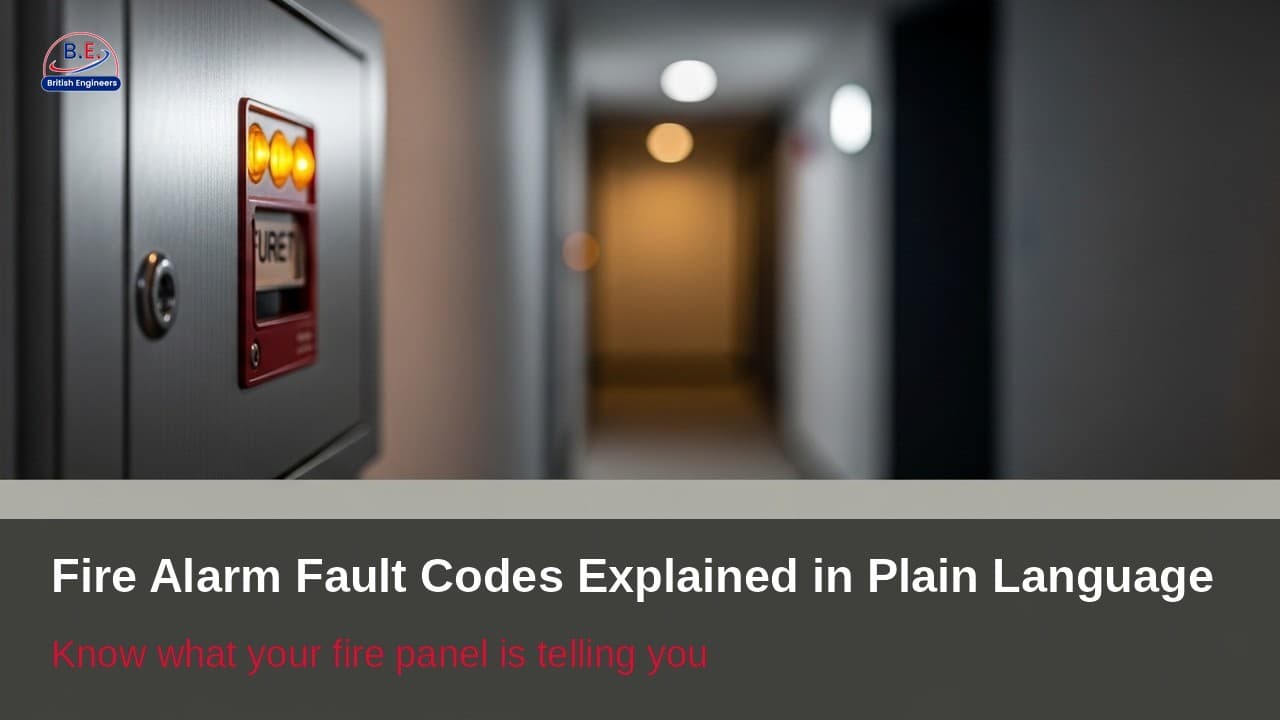
Your fire alarm control panel is the central nervous system of the entire detection network. Understanding its indicator lights allows you to communicate accurately with your engineer and respond appropriately in the interim.
- Steady green light: System is receiving mains power and is in normal standby mode.
- Amber or yellow light: A fault condition relating to a specific device, zone, wiring issue, or battery backup unit.
- Red light: An active alarm condition, either a genuine fire alert or a false activation.
Fire Alarm Panel Indicator Lights: Quick Reference
| Indicator Light | What It Means | Immediate Action |
|---|---|---|
| Steady green | Mains power active; system in normal standby | No action required |
| Amber or yellow | Fault condition: device, zone, wiring, or battery backup | Log the fault; contact a certified engineer |
| Red | Active alarm: genuine fire alert or false activation | Follow evacuation procedure; investigate cause after all-clear |
Many modern addressable panels also display alphanumeric fire alarm fault codes on screen. If a fault light will not clear after silencing the alarm, the panel is indicating that an underlying problem persists. Recognising these signals is a key part of any broader fire alarm compliance strategy.
How Manchester’s Climate Affects Fire Detection Reliability
Detection reliability issues rarely arise from a single dramatic failure. More often, they develop gradually as a result of environmental conditions and installation decisions that were not problematic at first but become significant over time. Manchester’s damp climate, with high annual rainfall, persistent condensation, and significant seasonal temperature swings, places particular demands on detection equipment. This is especially true in older Victorian terraces, converted mill buildings, and multi-occupancy properties common across areas such as Ancoats, Hulme, and Chorlton.
Contributing factors include humidity ingress into detector heads, corrosion of wiring terminals in older properties, airflow changes caused by renovation work, detectors placed in unsuitable locations, and panels installed without adequate surge protection.
Age of equipment is another key consideration. Research published in the Canadian Medical Association Journal found that approximately 25 to 30% of installed smoke alarms failed to function when tested on-site. Detectors older than ten years are generally considered at elevated risk of malfunction and should be assessed for replacement as part of routine maintenance.
When to Call a Certified Fire Alarm Engineer
There is a reasonable limit to what any building occupant should investigate independently. Checking batteries, silencing a false alarm, and reading basic panel indicators are sensible first steps. Beyond that, particularly in commercial properties, multi-occupancy buildings, or anywhere a fire alarm system is required under UK regulations, further investigation should be carried out by a qualified professional.
Call a certified engineer without delay if you experience any of the following:
- Recurring faults that return after being cleared
- Panel errors that cannot be reset
- Any fault following a fire incident or water damage
- A zone failure in any part of the building
- A complete loss of system power
Understanding why fire alarms keep going off repeatedly, or why they have fallen completely silent, is not a task for an untrained person. In these situations, log the fault clearly, avoid tampering with the panel, and book a qualified inspection promptly.
What a Professional Fire Alarm Inspection Covers
A thorough inspection from a certified engineer goes far beyond a visual check. A professional visit typically includes a full panel diagnostic reviewing logged fault codes, battery health, and zone status; testing of individual detectors using appropriate equipment; checking manual call points and wiring connections at key junctions; and verification that the system responds correctly across every protected zone.
At British Engineers, our certified team uses high-quality diagnostic tools and materials, ensuring any replacement parts or remedial work meets the same standards as the original installation. Following the inspection, you will receive a written fault report documenting what was found, what was resolved, and any recommendations for further action.

Questions to Ask Before Booking a Fire Alarm Engineer
Choosing the right engineer is as important as booking one promptly. Before confirming any appointment, consider asking whether engineers are certified to work in compliance with BS 5839, what the inspection covers and whether a written fault report is provided, whether call-out charges apply and if pricing is confirmed before the visit, and whether ongoing maintenance support is available following the initial inspection.
At British Engineers, we welcome every one of these questions. Our transparent quotations mean you know exactly what you are paying for before any work begins, and our certified engineers can handle everything from a single-detector fault to a full system diagnostic across a large commercial building. If your fire alarm system is beeping unexpectedly, showing panel warnings, or simply has not been inspected in a while, get in touch with our Manchester team today.
Frequently Asked Questions About Fire Alarm Problems
What is the most common cause of false fire alarms in UK homes?
The most common cause is dust or cooking fumes reaching a smoke detector. Detectors placed too close to kitchens or in poorly ventilated spaces are particularly prone to unwanted activations. Regular cleaning of detector heads and correct placement during installation can significantly reduce false alarm frequency.
How do I stop my fire alarm from beeping every 30 seconds?
A slow, repetitive chirp every 30 to 60 seconds usually indicates a low or dead battery in a standalone detector. Replace the battery first. If the beeping continues, the detector may be faulty or nearing the end of its service life and should be assessed by an engineer.
What does an amber light on a fire alarm panel mean?
An amber or yellow light indicates a fault condition within the system. This could relate to a specific detector, a wiring issue, a zone communication problem, or the battery backup unit. The fault should be investigated by a certified engineer and not simply silenced and ignored.
How often should a fire alarm system be inspected in the UK?
BS 5839-1 recommends that fire alarm systems in commercial properties receive a formal inspection at least every six months. Residential systems should be tested regularly by the occupant and professionally inspected as recommended by the installer or when faults arise.
Can I fix a fire alarm fault myself?
Basic actions such as replacing batteries or silencing a false alarm are reasonable for occupants. Any fault involving the control panel, wiring, zone failure, or recurring errors should be handled by a certified engineer. Tampering beyond basic steps can compromise safety and may affect regulatory compliance.
When should a smoke detector be replaced?
Detectors older than ten years are generally considered at elevated risk of malfunction, and most manufacturers recommend replacement within this timeframe. If a detector fails to respond during a test or triggers repeated false alarms, it should be assessed for replacement regardless of age.
Does Manchester’s climate affect fire alarm reliability?
Yes. Manchester’s high rainfall, persistent condensation, and temperature swings can accelerate corrosion of wiring terminals and cause humidity ingress into detector heads. Properties in older or converted buildings are particularly vulnerable. Regular professional maintenance helps manage these environmental effects.