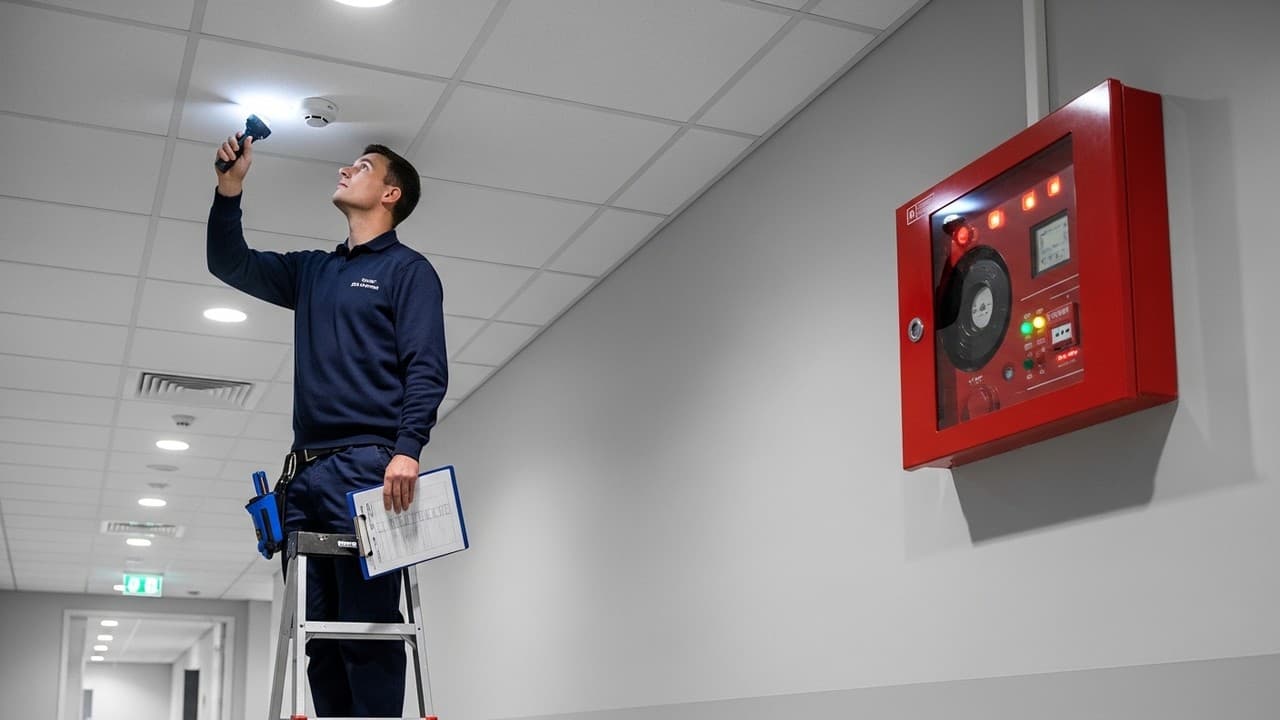
Maintenance & Repair
How Often Should Fire Alarms Be Serviced?
Learn the recommended fire alarm service intervals for Manchester homes and businesses, what each inspection covers, and how to stay compliant with BS 5839-1.
Table of contents
It is one of the most common questions we hear from homeowners and property managers across Manchester and the wider North West. Commercial fire alarms should be inspected by a qualified engineer at least every six months, in line with BS 5839-1. Weekly and monthly checks should also be carried out by the responsible person between those visits. But the full picture is more structured than that, and getting it right matters far more than most people realise.
A fire alarm system that is never tested or maintained may appear to be working perfectly, right up until the moment it fails when you need it most. This guide walks through the recommended servicing schedule for UK properties, what happens to detectors between visits, and how to choose the right ongoing support for your situation.
Why Fire Alarm Servicing Intervals Exist Beyond Compliance
Fire alarm systems degrade in ways that are completely invisible during normal daily use. Dust builds up inside detector heads, batteries lose charge capacity gradually, and control panel components age without showing any outward signs of failure. A detector that powered on this morning may still respond too slowly, or not at all, in a real emergency.
The human cost of fire incidents makes this especially stark. According to UK Government fire statistics, there were 240 fire-related fatalities and 6,347 non-fatal casualties in England between April 2020 and March 2021. A significant proportion of those fatalities occurred in properties where detection systems were present but not functioning correctly. Scheduled maintenance is the most reliable way to close that gap.
The BS 5839-1 Servicing Schedule for Manchester Properties
The UK standard for fire alarm maintenance is BS 5839-1:2017, published by the British Standards Institution. It sets out a layered schedule based on who performs each check and what that check is designed to catch:
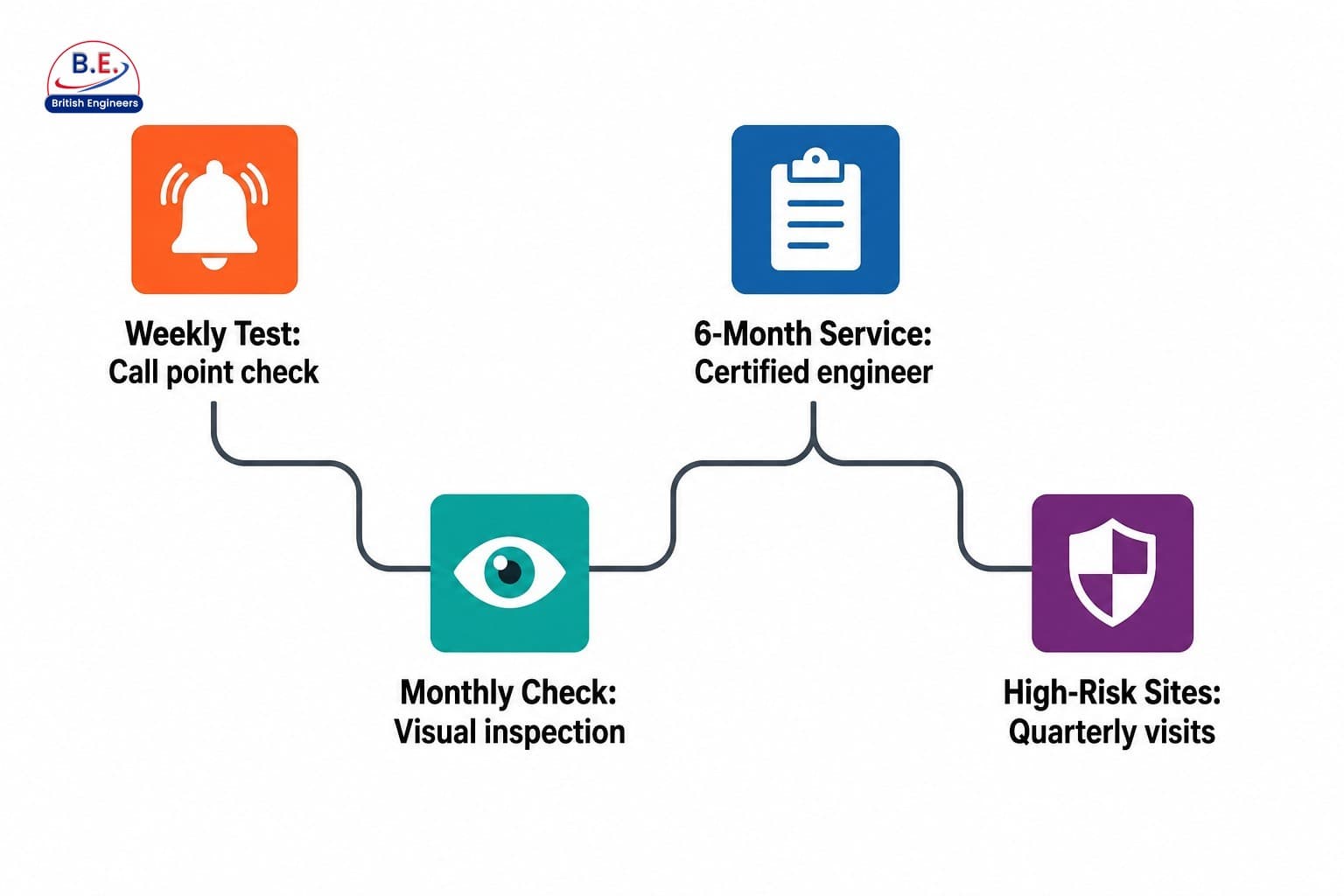
- Weekly: A manual call point test carried out by the responsible person or a designated occupant
- Monthly: A visual inspection of detector heads and panel indicators
- Every six months: A full inspection by a qualified engineer
Higher-risk environments, such as buildings with sleeping occupants, complex multi-zone systems, or a history of faults, may need checks more frequently. Quarterly inspections are sometimes appropriate in those settings. Every test and service visit must be recorded in a fire alarm maintenance log, as these records are routinely requested during fire service audits and insurance reviews.
| Frequency | Who Carries It Out | What It Covers |
|---|---|---|
| Weekly | Responsible person or designated occupant | Manual call point test; confirm sounder and panel response |
| Monthly | Responsible person or designated occupant | Visual check of detector heads and panel indicators; log any faults |
| Every six months | Qualified, certified engineer | Full system inspection including detector sensitivity, battery condition, and zone mapping |
| Quarterly (where applicable) | Qualified, certified engineer | Required for higher-risk premises such as buildings with sleeping occupants or complex systems |
Weekly and Monthly Checks You Can Do Yourself
According to BS 5839-1, weekly testing of a manual call point is required for commercial premises. A different call point should be activated each week so that all units are cycled through over time. The purpose is to confirm the sounder operates, the panel registers the trigger, and nothing in the basic circuit has failed since the last test.
Monthly checks involve a broader visual review of detector heads and panel indicators, noting any fault or warning lights. These routine self-checks form the first layer of a solid fire alarm testing checklist and should be logged every time they are completed.
Six-Monthly Inspections by a Qualified Engineer
BS 5839-1 requires that fire alarm systems be inspected by a competent person at least every six months. These inspections go well beyond what an occupant can assess from a button press. A qualified engineer will:
- Test individual detector sensitivity using specialist equipment
- Inspect every manual call point and verify control panel zone mapping
- Examine battery condition and backup power capacity
- Confirm the system responds correctly across all zones
These planned checks catch the failures that self-testing cannot. Only a certified professional has the tools, training, and liability accountability to carry this work out correctly.
What Happens to a Fire Alarm System Between Services
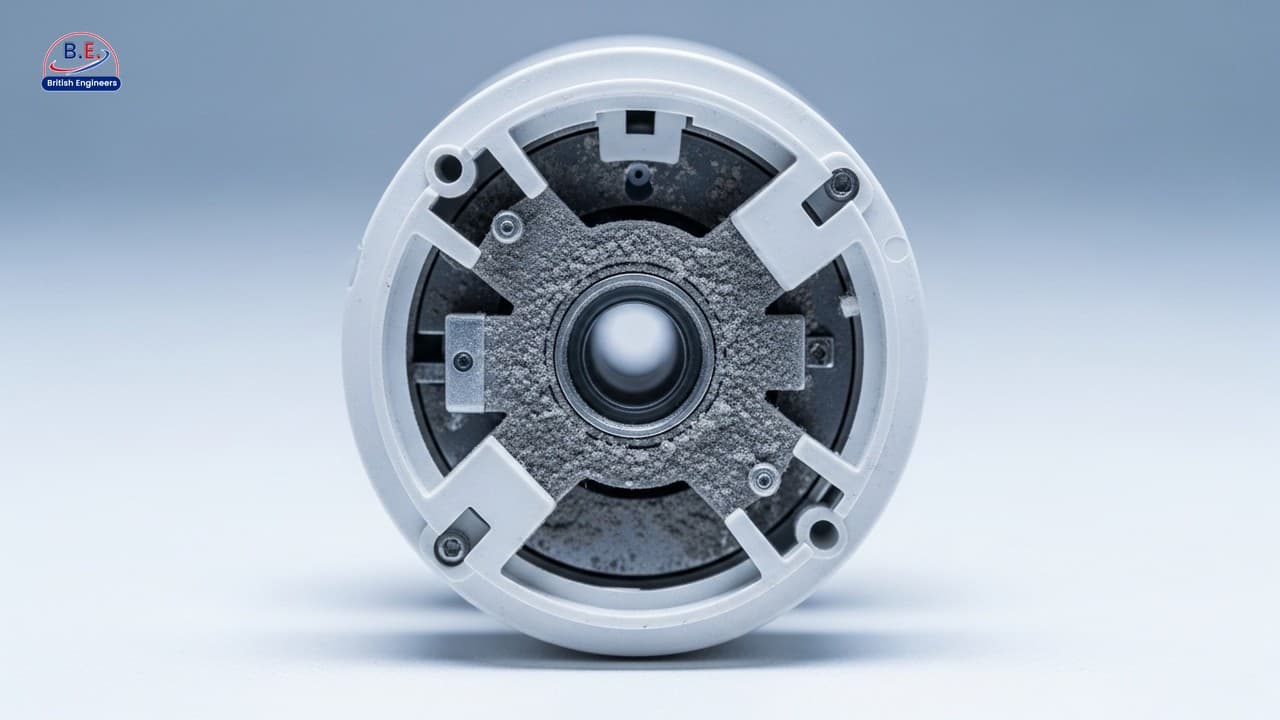
Between service visits, several slow-building factors reduce system reliability. Optical smoke detectors draw in airborne particles over time, causing internal contamination that affects sensitivity. Heat detectors in kitchens experience repeated temperature cycling that stresses their components. Batteries in wireless devices discharge at a rate that is difficult to track without monitoring equipment, and control panel faults can develop without triggering any visible alert.
A system that was fully functional at its last service may be operating outside its specified sensitivity range within months, particularly in dusty or high-humidity environments. Manchester’s older commercial and industrial stock, much of which has been converted or repurposed over the decades, can present exactly these conditions. The six-monthly inspection interval exists because that is roughly the window in which meaningful degradation can occur undetected.
Domestic vs Commercial Properties: Different Rules, Different Risks
Homeowners and property managers operate under different frameworks when it comes to servicing obligations.
For private homeowners, there is no statutory requirement to engage a certified engineer on a six-monthly basis, though following BS 5839-6 guidance is strongly recommended for Grade D and Grade C systems.
For commercial premises, the Regulatory Reform (Fire Safety) Order 2005 places legal responsibility on a designated Responsible Person to ensure all fire detection and warning systems are properly maintained. Failure to comply can result in enforcement notices, prohibition orders, prosecution, and fines.
Houses in Multiple Occupation (HMOs) and rental properties sit in an especially important category. They combine sleeping occupants, who face the greatest risk during a fire, with commercial-level legal accountability for landlords. Across Manchester, areas such as Fallowfield, Rusholme, and Salford have high concentrations of HMOs and rented accommodation, making consistent fire alarm maintenance particularly important in these locations. These properties often require more frequent servicing than a standard office.
A survey by JLA found that 20% of businesses only check their fire alarm systems once a year, well short of the minimum standard. That figure shows how common under-maintenance actually is, even among businesses that intend to stay compliant.
| Property Type | Legal Obligation | Recommended Standard | Engineer Visits Required |
|---|---|---|---|
| Private home | No statutory requirement for engineer visits | BS 5839-6 guidance recommended | As needed; at least annually is advisable |
| Commercial premises | Regulatory Reform (Fire Safety) Order 2005 | BS 5839-1 | Minimum every six months |
| HMOs and rental properties | Landlord legally responsible for maintenance | BS 5839-1; often higher-risk category | Every six months or more frequently |
Signs Your System Needs Attention Before the Next Scheduled Check
Planned inspections are not the only trigger for calling an engineer. Contact a professional promptly if you notice any of the following:
- Frequent false alarms: A pattern of nuisance trips points to a contaminated detector, faulty call point, or wiring issue
- Offline detectors or persistent fault lights: These should never be ignored or silenced without investigation
- Delayed sounder response during weekly tests: A noticeably slower reaction can indicate a developing circuit fault
- Lapsed service records: Missing documentation can invalidate insurance cover, as insurers commonly require evidence of regular testing
If your system shows any of these warning signs, waiting for the next scheduled service is not the right approach. An unplanned inspection is always preferable to discovering the fault during a real emergency.
What a Professional Fire Alarm Service Should Include
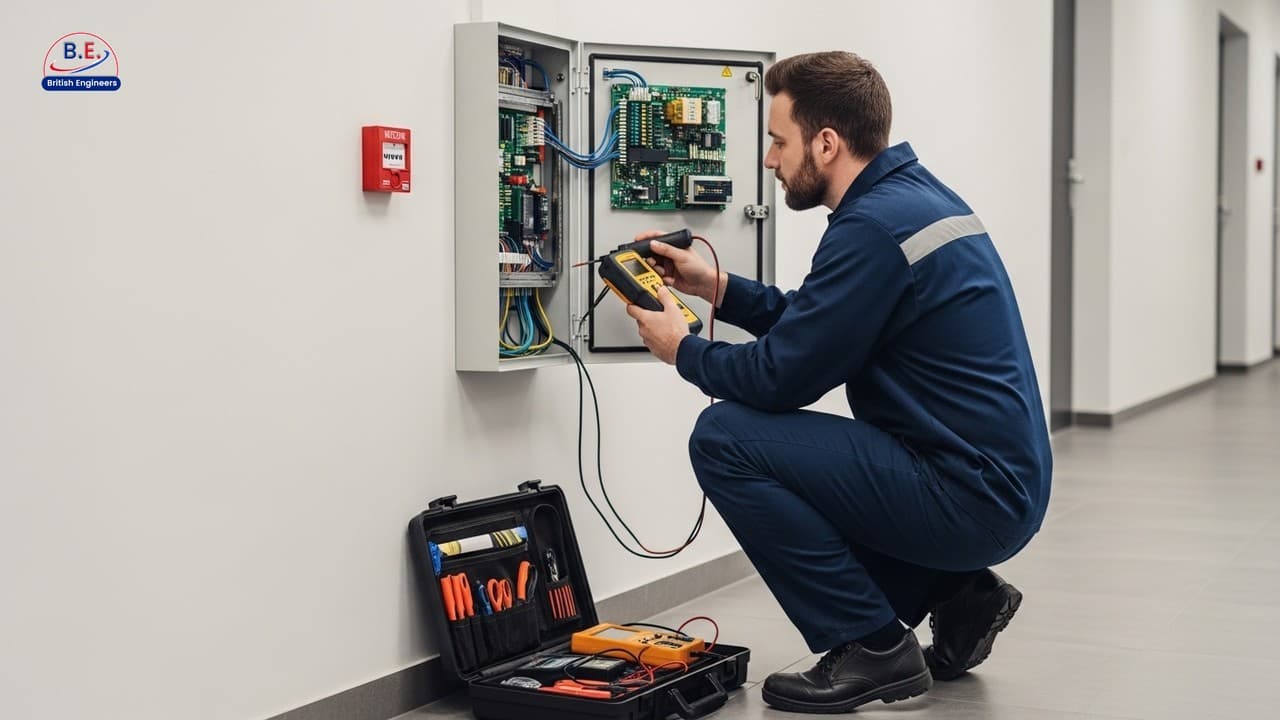
A thorough service visit covers considerably more than a simple functional test. A qualified engineer should check:
- All detector heads for damage, contamination, or incorrect positioning
- Detector sensitivity using calibrated equipment, and all manual call points individually
- Control panel fault history, zone mapping, and battery backup integrity
- Written documentation of findings, actions taken, and any recommendations
At British Engineers, our certified engineers carry out all of these checks using premium equipment. Every visit is followed by clear written documentation, with no hidden costs and no vague reports. Our fire alarm maintenance checklist approach means every inspection is systematic, transparent, and fully recorded, so you always have the evidence you need for compliance, insurance, and peace of mind.
Choosing the Right Maintenance Plan for Your Manchester Property
Selecting the right plan starts with understanding what your property actually requires. When speaking to any service provider, ask whether engineers hold recognised certifications, what the plan covers in terms of parts and labour, and what the emergency callout response time is between scheduled visits.
A plan that covers only the bi-annual visits without emergency support may leave you exposed during the months in between. Long-term reliability comes from having a trusted service partner who knows your system’s history, not from a series of disconnected one-off callouts.
British Engineers offers ongoing maintenance support across Manchester and the surrounding region, including the city centre, Salford, Trafford, Stockport, and beyond. Whether you manage a single residential property or a portfolio of commercial sites, we build our support around what your system genuinely needs. Get in touch with our team today to discuss your servicing schedule or book an inspection.
Frequently Asked Questions About Fire Alarm Servicing in Manchester
How often should a fire alarm be serviced in a commercial property?
Commercial fire alarm systems should be inspected by a qualified engineer at least every six months, as required by BS 5839-1. The responsible person must also carry out weekly call point tests and monthly visual checks. Higher-risk premises, such as those with sleeping occupants or complex systems, may require quarterly professional inspections.
Is fire alarm servicing a legal requirement in the UK?
For commercial premises, yes. The Regulatory Reform (Fire Safety) Order 2005 requires the responsible person to ensure fire detection and warning systems are properly maintained. Failure to comply can lead to enforcement notices, fines, or prosecution. Private homeowners are not legally bound to the same standard, but following BS 5839-6 guidance is strongly recommended.
Do landlords in Manchester need to service fire alarms in rental properties?
Yes. Landlords are legally responsible for ensuring fire detection systems in rented properties, including HMOs, are maintained and in working order. Areas such as Fallowfield, Rusholme, and Salford have high concentrations of rented accommodation, and these properties often benefit from more frequent servicing given the risks associated with sleeping occupants.
What does a six-monthly fire alarm inspection involve?
A qualified engineer will test each detector’s sensitivity using calibrated equipment, inspect all manual call points, review the control panel’s zone mapping and fault history, and assess battery backup condition. The visit concludes with written documentation of findings and any recommended actions, providing a formal record for compliance and insurance purposes.
What happens if a fire alarm is not serviced regularly?
Detectors can become contaminated, batteries can degrade, and panel faults can develop without visible warning. A system may appear functional but operate outside its specified sensitivity range, potentially failing to trigger in a real fire. Lapsed service records can also invalidate insurance cover and place the responsible person in breach of fire safety law.
Can I test my own fire alarm, or does it need to be a professional?
Weekly call point tests and monthly visual checks can be carried out by the responsible person or a designated occupant, with no specialist equipment needed. However, the six-monthly inspection must be conducted by a competent, certified engineer using calibrated tools. Self-testing does not substitute for the professional inspection required under BS 5839-1.