Key Takeaways
Fire alarms keep going off due to environmental triggers, poor placement, dust, steam, or ageing detectors — most causes are identifiable and fixable with the right guidance.
- Cooking fumes, steam, and dust are among the most common false fire alarm causes, and are often linked to detector placement rather than a system fault.
- Dust triggering detectors and steam causing alarms can be reduced by gently cleaning ventilation slots and repositioning detectors away from kitchens and bathrooms.
- Smoke alarms older than ten years become unreliable and should be replaced — faulty detector warning signs include intermittent chirping, random activations, and failure during testing.
- Repeated smoke alarm nuisance alerts across multiple areas or at night with no clear cause may signal a system-level issue requiring professional assessment, not just a single detector swap.
- Homeowners can safely clean detectors, check positioning, and run test button checks, but wiring, panel resets, or internal component access should always be handled by a certified engineer.
Few things are more disruptive than a fire alarm that activates without any sign of smoke or fire. Whether it happens in the middle of the night at home or during a busy working day at your commercial premises, the experience is unsettling and often leaves you wondering whether something is genuinely wrong. In most cases, the cause is identifiable and fixable without panic.
This guide helps homeowners and property managers in Manchester and across the UK work through the most likely explanations, recognise the difference between a harmless nuisance and a serious warning, and know when to call a certified engineer.
Why Do Fire Alarms Keep Going Off for No Reason?
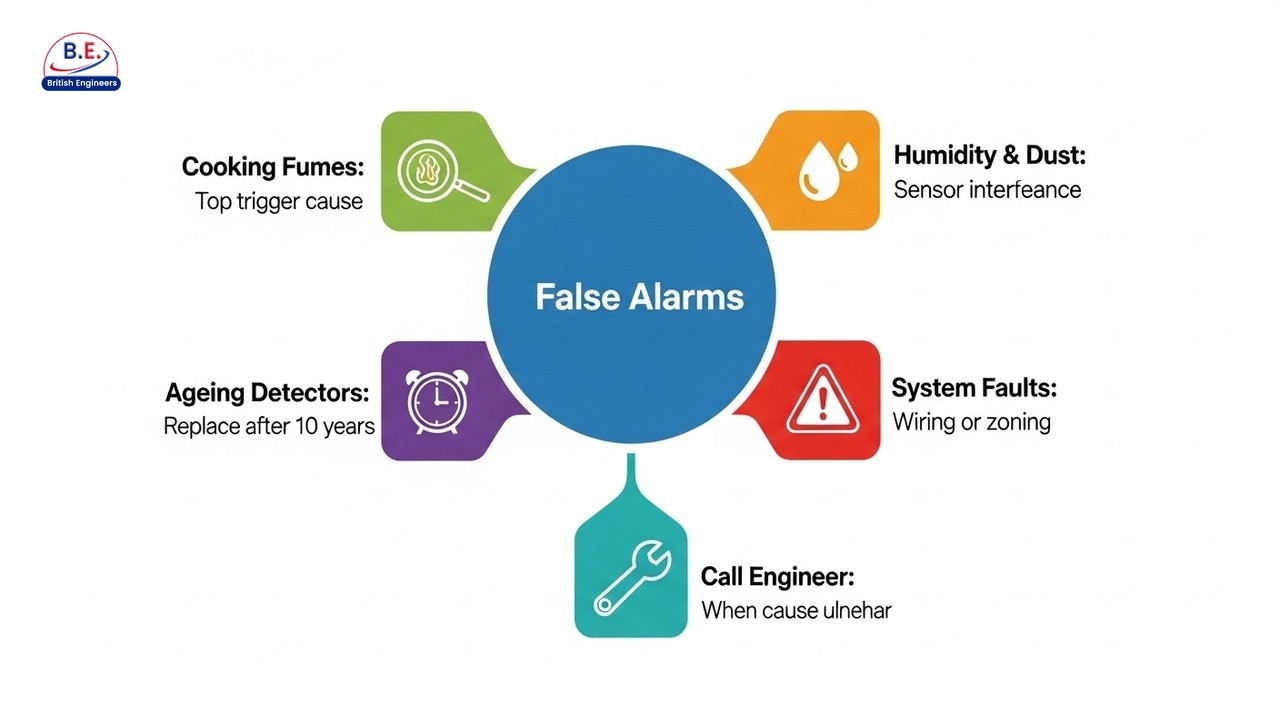
In most cases, there is a reason. It just is not always obvious at first. Cooking fumes, steam, dust, ageing detectors, and system-level faults are responsible for the vast majority of unwanted activations.
The scale of the problem is significant. False alarms accounted for 42% of all Fire and Rescue Service incidents in England for the year ending June 2020, according to the UK Home Office. According to the National Fire Protection Association (NFPA), cooking-related activations, including smoke and steam, are among the most commonly cited reasons alarms sound without a fire present.
These are not fringe events. They point to identifiable, recurring causes across both residential and commercial properties, including the many older terraced homes, converted apartments, and busy commercial units typical across Greater Manchester.
The Most Common Causes of Repeated Fire Alarm Activations
Environmental Triggers
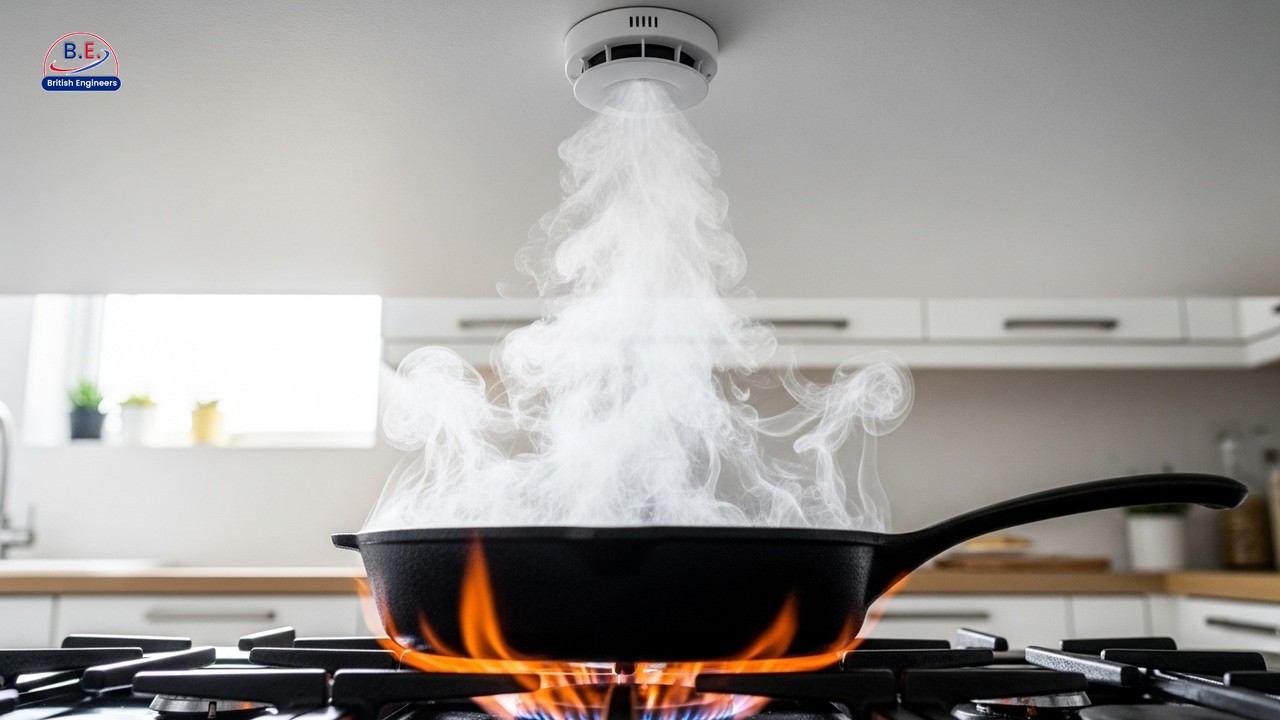
Your immediate environment plays a larger role in alarm behaviour than many people expect. Frying produces more airborne particles than other cooking methods and is one of the leading triggers of unwanted activations. A study published in the American Journal of Public Health recorded 69 nuisance activations across 54 homes, with frying and close detector placement being the primary causes.
High humidity can also interfere with detector sensors, particularly in older or budget-grade units. This is a common issue in Manchester’s characteristically damp climate, where indoor humidity levels can remain elevated throughout much of the year. Similarly, areas near boiler rooms or external walls can expose heat-sensitive detectors to temperature fluctuations that cause unintended activations.
If your alarm tends to go off around the same time of day or in relation to specific activities, the environment is almost certainly involved.
Steam and Dust
Steam from showers, kettles, and dishwashers can reach the detector’s sensor chamber and mimic the particle density associated with smoke. This is a particularly common complaint in properties where a bathroom or kitchen sits close to a detector, something frequently encountered in the compact layouts of converted flats and Victorian terraces throughout areas such as Salford, Chorlton, and Didsbury.
Dust accumulates inside the sensor chamber over time. Once enough builds up, even a slight movement of air can trigger an activation. This is especially common during renovations, in older properties, or in rooms that are rarely ventilated. Incorrect detector placement, too close to a kitchen, bathroom, or boiler room, significantly increases the frequency of unwanted activations and is straightforward to correct with professional guidance.
Ageing or Faulty Detectors
Detectors do not last indefinitely. Smoke alarms over ten years old become increasingly unreliable, prone to both false activations and failure to detect genuine fire. This age threshold is widely recognised across the UK fire safety sector.
Signs that a detector may be faulty include intermittent chirping beyond a low-battery warning, activations with no identifiable trigger, failure to respond during a test, and inconsistent behaviour over time. Research published by PMC and the American Journal of Public Health found that approximately 25 to 30% of smoke alarms in homes did not function when tested, with failures linked to malfunction or missing batteries. Having a detector installed does not guarantee protection unless it is functional and properly maintained.
System-Level Faults
Some properties experience repeated false alarms that cannot be traced to a single unit. In these situations, the problem is often systemic. Common fire alarm problems at the system level include incorrect zoning, incompatible components mixed during installation or replacement, poor wiring causing interference across the network, and non-compliance with BS 5839-1 during installation or maintenance.
Stephen Adams, Chief Executive of BAFE, has noted that false alarms due to apparatus should not be this high, and that the issue creates additional cost for the Fire and Rescue Service where budgets are already under pressure. A system-wide problem requires more than cleaning a sensor or replacing a battery. It requires a full professional assessment.
| Cause | Typical Source | Most Affected Properties | Likely Fix |
|---|---|---|---|
| Cooking fumes and steam | Frying, grilling, kettles, dishwashers | Kitchens, open-plan layouts | Improve ventilation; reposition detector |
| High humidity | Showers, damp climate, poor ventilation | Bathrooms, older properties in Manchester | Relocate detector; improve airflow |
| Dust accumulation | Renovation work, poor ventilation, age | Older homes, rarely used rooms | Clean detector vents; professional servicing |
| Ageing detector | Sensor degradation after ten or more years | Any property with older units | Replace detector |
| Temperature fluctuations | Boiler rooms, external walls, overnight heating drop | Homes with older heating systems | Reposition detector; check placement |
| System-level faults | Incorrect zoning, incompatible components, poor wiring | Commercial premises, multi-unit buildings | Full professional system assessment |
Nuisance Alert or Genuine Warning? How to Tell the Difference
Not every unexpected activation means something is seriously wrong. But dismissing all alarms as false is dangerous. Repeated nuisance alerts often lead occupants to remove batteries or disable detectors entirely, creating real periods of fire risk.
Pattern recognition helps assess the situation. Consider where the alarm is located: a detector near a kitchen or bathroom is more likely to be triggered by environmental factors. Consider what was happening at the time, whether cooking, showering, or renovation work, as these are common harmless triggers. Then consider frequency: a single kitchen activation after frying is a nuisance alert, while multiple activations across different areas, especially at night with no clear cause, deserve closer attention.
Frequency, timing, and location together give you a more complete picture than any single event can provide.
What You Can Check Before Calling an Engineer
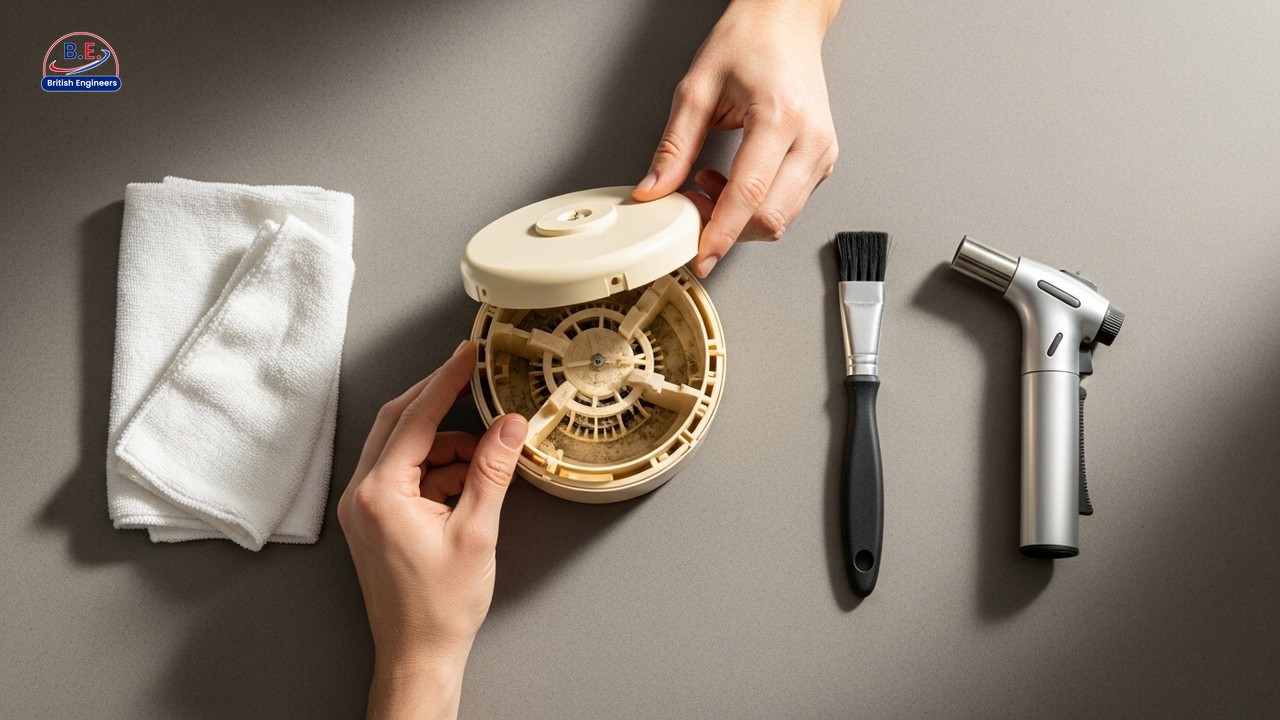
There are several safe steps you can take yourself before arranging a professional visit. These can help narrow down the cause and give you useful information when you do speak to an engineer.
- Clean the exterior of the detector gently with a dry cloth or soft brush, and use a vacuum with a soft attachment to remove dust from ventilation slots, without opening the unit.
- Check the detector’s position relative to the kitchen, bathroom, or steam-producing appliances.
- Review any recent environmental changes such as redecoration, new appliances, or changes in ventilation that may have affected air quality near the detector.
- Test the alarm using the dedicated test button to confirm it is functioning correctly.
Do not attempt to access internal components, reroute wiring, or reset commercial-grade panel systems without proper training. Doing so could invalidate your system’s compliance certification and, in a commercial property, may breach your legal obligations under UK fire safety legislation.
When Manchester Properties Should Call a Certified Fire Alarm Engineer
Call a certified engineer if repeated activations have no clear environmental explanation, if multiple fault indicators appear across the system, or if detectors are more than ten years old. Commercial properties with compliance and maintenance obligations, or any property experiencing post-installation issues that were not present initially, should also seek professional assessment without delay.
It is worth noting that only a small proportion of alarm systems tend to account for a disproportionate share of false fire alarm activations, according to the NFPA. If your property falls into that category, targeted professional inspection is the most efficient way to resolve the problem and prevent recurrence.
In commercial properties across Manchester and the wider UK, fire alarm systems are subject to regulatory requirements that mandate professional inspection, testing, and maintenance at defined intervals. Whether you manage a city centre office, a retail unit in the Northern Quarter, or a residential block in Trafford, these standards apply equally and are a legal obligation.
| Situation | Recommended Action |
|---|---|
| Single activation after cooking or showering | Check ventilation and detector placement yourself |
| Dust build-up on detector exterior | Clean vents gently; monitor for further activations |
| Detector is ten or more years old | Call a certified engineer for replacement |
| Repeated activations with no identifiable cause | Call a certified engineer for full assessment |
| Multiple fault indicators across the system | Call a certified engineer immediately |
| Commercial property with compliance obligations | Professional inspection and documented maintenance required |
| Post-installation issues not present initially | Call a certified engineer to assess installation quality |
How British Engineers Can Help
At British Engineers, our certified team carries out personalised assessments of your property across Manchester and the surrounding area. We identify whether the issue relates to individual detectors, positioning, or deeper system faults, and we provide clear, transparent guidance on exactly what needs to be done. No unnecessary work, no vague recommendations.
Whether you are a homeowner dealing with repeated nuisance alerts or a property manager with compliance responsibilities, we are here to make sure your fire alarm system works exactly as it should. If your alarms have been causing concern, contact us today and let us help you restore both safety and peace of mind.
Frequently Asked Questions About Fire Alarms Going Off
Why does my fire alarm keep going off in the middle of the night with no smoke?
Night-time activations are often caused by temperature drops, humidity changes, or insects entering the sensor chamber. As central heating switches off overnight, shifting air conditions can trigger sensitive detectors. If this happens repeatedly with no clear cause, the detector may be ageing or poorly positioned and should be inspected by a certified engineer.
How do I stop my fire alarm going off when I cook?
Improve kitchen ventilation by opening a window or using an extractor fan when frying or grilling. If the detector is positioned too close to the kitchen, relocating it is often the most reliable fix. A certified engineer can advise on compliant placement that reduces cooking-related activations without compromising protection.
How often should fire alarms be replaced?
Smoke alarms should generally be replaced after ten years, as sensors degrade and reliability decreases with age. The manufacture date is usually printed on the back of the unit. If your detector is approaching or past this threshold and experiencing unexplained activations, replacement is strongly recommended rather than continued maintenance.
Is a fire alarm that keeps going off a legal issue for commercial properties in the UK?
Yes. Under UK fire safety legislation, commercial property managers have a legal duty to maintain a functioning and compliant fire alarm system. Persistent false alarms may indicate the system is not being maintained to the required standard. Professional inspection and documented maintenance records are required to demonstrate compliance with the Regulatory Reform (Fire Safety) Order 2005.
Can dust really cause a fire alarm to go off?
Yes. Dust particles inside the sensor chamber can trigger photoelectric detectors by scattering light in the same way smoke would. This is particularly common in older properties, during renovation work, or in poorly ventilated rooms. Regular cleaning of detector vents and periodic professional servicing helps prevent dust-related false alarms.